
- admin
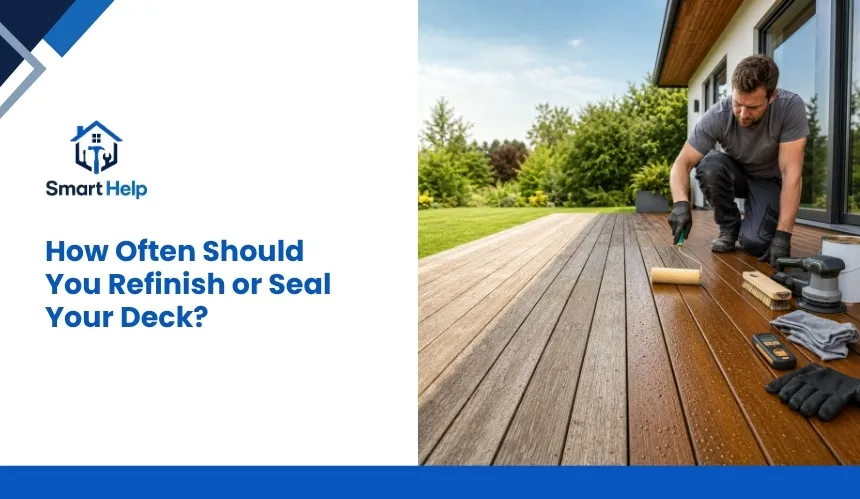
How Often Should You Refinish or Seal Your Deck?
Deck sealing and refinishing are important parts of protecting wood from moisture, UV exposure, temperature changes, and everyday wear. Although decks are designed to withstand outdoor conditions, their protective finishes gradually break down over time and eventually need maintenance.
Many homeowners are unsure how often this maintenance should be performed because there is no single schedule that works for every deck. Climate, finish type, deck material, sun exposure, and overall usage all influence how long a protective coating will last.
This guide explains recommended maintenance timelines for deck sealing and refinishing, the factors that affect those schedules, the warning signs that protection is wearing off, and what can happen when maintenance is delayed for too long.
Recommended Maintenance Timelines for Deck Sealing and Refinishing
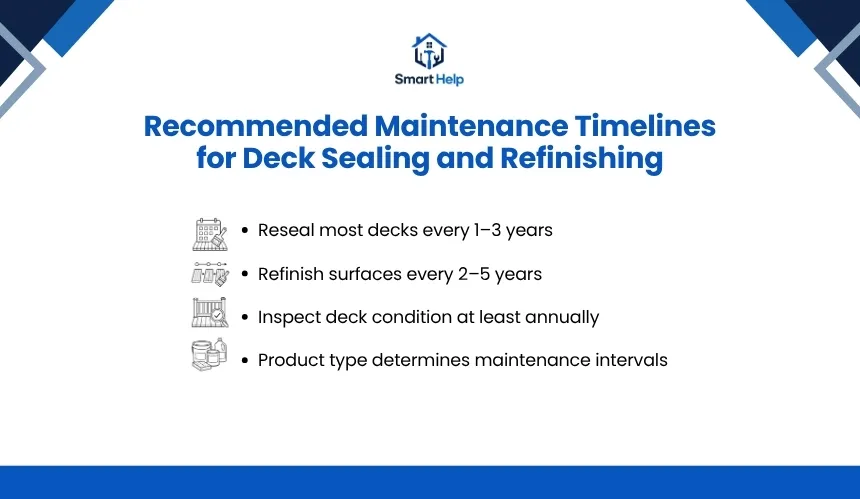
Most wood decks need resealing every 1 to 3 years and refinishing every 2 to 5 years, depending on the finish and environmental conditions. However, these timelines are guidelines rather than strict rules because weather exposure and deck usage can shorten or extend the lifespan of the protective coating.
Inspecting the deck annually is recommended, even if it does not yet appear to need maintenance. Early signs of wear are easier and less expensive to address than extensive deterioration.
Typical intervals for stains, sealers, and finishes
Different products have different lifespans:
- Clear water repellents and transparent sealers: every 1 to 2 years
- Semi-transparent stains: every 2 to 3 years
- Solid stains: every 3 to 5 years
- Painted deck surfaces: every 5 to 10 years, depending on peeling and surface condition
- High-traffic decks exposed to full sun: may need maintenance sooner than average
These intervals can vary by manufacturer and climate, but they provide a practical starting point for most homeowners.
Why maintenance schedules vary between decks
A deck exposed to intense sun, frequent rain, snow, or heavy foot traffic may require resealing sooner than the typical schedule. For example, a south-facing deck with no shade may need maintenance every one to two years, while a covered or partially shaded deck may retain its finish longer.
Instead of relying only on the calendar, homeowners should also inspect the surface annually. If water no longer beads on the wood, the finish appears faded, or the boards feel dry and rough, it may be time to refinish or reseal, even if the expected timeline has not yet been reached.
What Factors Affect How Frequently a Deck Needs Maintenance?
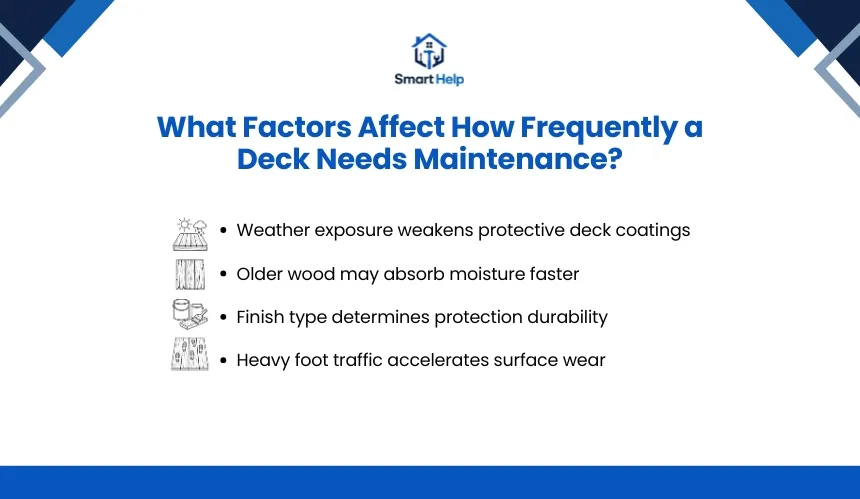
The lifespan of a deck finish is influenced by much more than time alone. Environmental conditions, construction materials, and everyday use all affect how quickly sealers and finishes wear down.
Because every deck experiences different conditions, two similar decks may require maintenance at completely different intervals. Understanding these factors helps homeowners recognize why some decks need attention sooner than others.
1. Weather exposure
Rain, snow, humidity, and prolonged sun exposure gradually weaken protective coatings. Constant moisture can increase water absorption, while ultraviolet rays may cause fading, drying, and surface deterioration.
Decks located in areas with severe seasonal changes often experience greater stress throughout the year. As exposure increases, maintenance may be required more frequently to maintain adequate protection.
2. Deck material
Different deck materials respond differently to weather and protective coatings. Natural wood species absorb stains and sealers at different rates, which can influence how long the finish remains effective.
The age and condition of the wood also play a role. Older decking materials may absorb moisture more easily and require maintenance sooner than newer surfaces.
3. Finish type
Not all deck finishes provide the same level of durability. Clear sealers, semi-transparent stains, solid stains, and painted surfaces each age differently and have their own maintenance requirements.
Some finishes offer stronger UV protection, while others prioritize the natural appearance of the wood. The type of product originally applied often determines how long the protection will last.
4. Foot traffic and daily use
Decks used regularly for outdoor dining, entertaining, pets, and daily activities experience more wear than surfaces that receive occasional use. Frequent movement gradually wears down protective coatings in high-traffic areas.
As the finish begins to deteriorate, those heavily used sections may require maintenance before the rest of the deck. Uneven wear patterns are common on actively used outdoor spaces.
5. Shade and moisture retention
Decks surrounded by trees or located in shaded areas may remain damp longer after rainfall. Reduced sunlight and limited airflow can slow drying and create conditions that encourage mildew and discoloration.
When moisture remains trapped for extended periods, protective finishes may break down more quickly. These conditions can shorten the maintenance cycle even when the deck receives limited foot traffic.
Signs Your Deck May Need Refinishing or Resealing
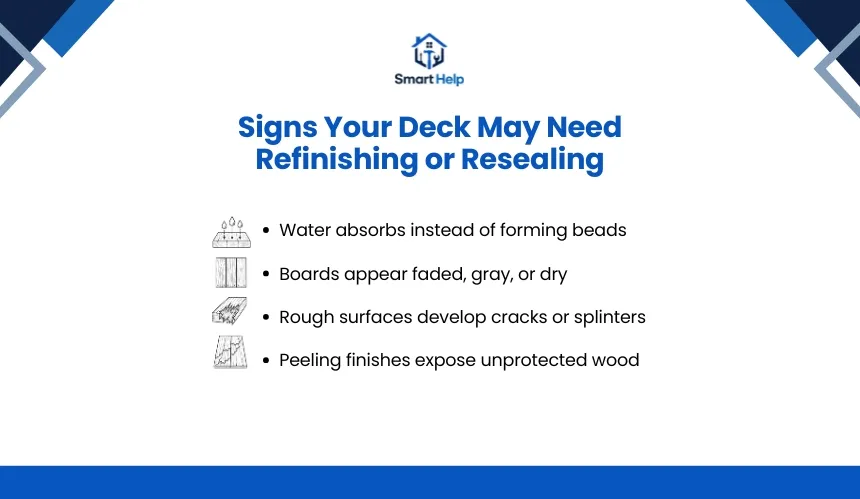
A deck usually needs maintenance when the surface no longer repels water, looks faded, or begins showing visible wear. These signs often appear before serious damage develops, so noticing them early can help prevent larger repairs.
- Water No Longer Beads on the Surface: If water soaks into the boards instead of forming beads, the protective finish may be wearing off. This means moisture can enter the wood more easily.
- Faded or Gray-Looking Boards: Sun exposure can gradually fade the finish and leave the deck looking dull or gray. This often indicates that UV protection has weakened.
- Rough or Splintering Texture: A dry, rough, or splintered surface may show that the wood is losing protection. Refinishing can help restore a smoother and safer surface.
- Peeling or Flaking Finish: If the previous coating is peeling, cracking, or flaking, it may no longer be protecting the deck evenly. These areas usually need preparation before a new finish is applied.
- Dark Spots or Mildew Growth: Moisture-related staining may suggest that the deck is staying damp too long. Cleaning and resealing can help reduce further surface deterioration.
What Happens When Deck Maintenance Is Delayed?
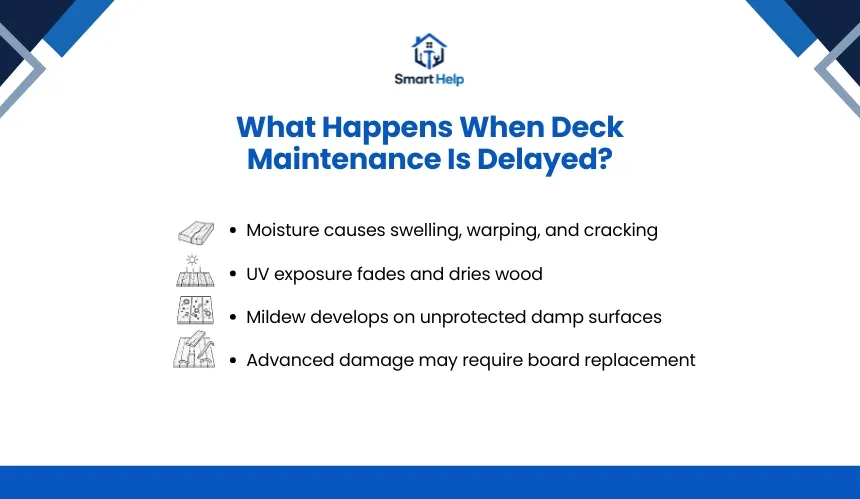
Delaying deck maintenance can allow weather and moisture to affect the wood after the protective finish begins to fail. Although the damage may not be noticeable immediately, prolonged exposure can gradually shorten the life of the deck.
Once sealers and finishes wear away, the wood becomes more vulnerable to environmental conditions. Addressing maintenance early is often easier and less expensive than correcting advanced deterioration later.
How moisture and UV exposure affect wood
Without adequate protection, moisture can penetrate the wood and contribute to swelling, warping, cracking, and surface deterioration. Prolonged exposure to rain and humidity may also encourage mildew and discoloration.
Ultraviolet rays from the sun can dry out the wood and cause fading over time. As UV damage increases, the deck may begin losing its original appearance and surface integrity.
Why postponed maintenance can lead to larger repairs
Minor signs of wear are often easier to address through routine sealing or refinishing. However, allowing the finish to deteriorate completely may expose the wood to conditions that require more extensive repairs.
Boards affected by excessive moisture, cracking, or decay may eventually need replacement instead of simple refinishing. Keeping up with maintenance helps protect the deck and may reduce long-term repair costs.
Frequently Asked Questions
How often should a wood deck be sealed?
Most wood decks need resealing every one to three years, depending on weather exposure, deck material, and the type of product previously applied. Regular inspections help determine the right timing.
Is sealing the same as refinishing a deck?
No. Sealing adds protective moisture resistance, while refinishing usually involves cleaning, preparing, and applying a new stain or finish to restore the deck’s appearance and protection.
How can homeowners tell if a deck needs resealing?
Common signs include water absorption, fading, rough texture, peeling finishes, and visible discoloration. These changes often indicate that the protective coating is wearing off.
Can delaying deck maintenance damage the wood?
Yes. Once the protective finish deteriorates, moisture and UV exposure can contribute to cracking, warping, fading, and other forms of deterioration.
Does deck material affect maintenance frequency?
Yes. Different wood species and deck materials respond differently to weather and protective coatings. Some surfaces require more frequent maintenance than others.